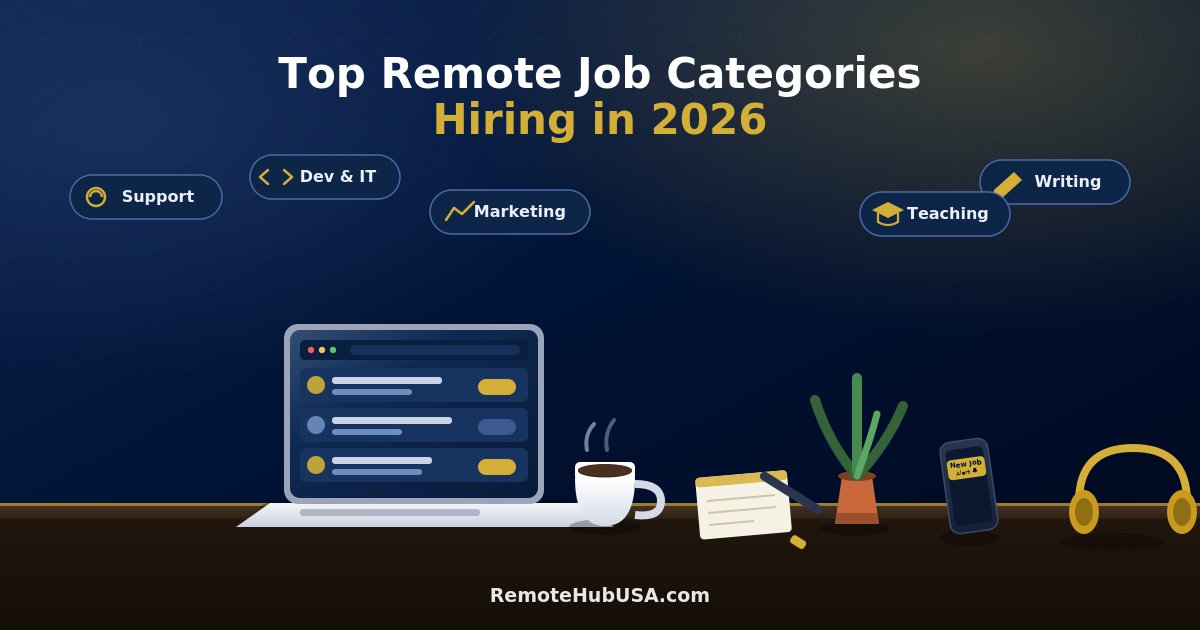
If you’ve spent any time scrolling job boards lately, you’ve probably noticed the same thing we have: “remote” doesn’t mean what it used to. A few years ago, remote work was mostly tech people and freelance writers. Now? It’s customer support teams, accountants, therapists, teachers, recruiters — basically every industry has figured out how to make at least part of itself remote-friendly.
So if you’re trying to figure out where to actually focus your job search in 2026, here’s a real look at the categories that are hiring the most — and why.
1. Customer Support and Service
This is probably the easiest remote category to break into, and it’s not slowing down. Companies have realized that a good support agent doesn’t need to sit in an office — they need a headset, a decent internet connection, and patience. Roles range from live chat support to phone-based help desks to social media customer service.
Why it’s growing: Businesses are cutting office costs while customer expectations for fast support keep rising. Remote support teams let companies cover more hours (and time zones) without opening a second office.
What helps you get hired: Clear written and spoken English, basic computer skills, and honestly, patience. Most entry-level roles don’t require a degree — they require someone who won’t lose their cool on a difficult call.
2. Software Development and IT
This one’s not surprising, but it’s worth saying anyway: developers, DevOps engineers, and IT support specialists remain some of the most in-demand remote workers out there. Companies figured out during the pandemic that most coding work doesn’t need to happen in an office, and most haven’t gone back.
Why it’s growing: Every company is now a tech company in some form, and there simply aren’t enough developers to go around locally — so companies hire remotely to access a bigger talent pool.
What helps you get hired: A solid portfolio matters more than a fancy degree in most cases. If you can show real projects — even personal ones — you’re already ahead of a lot of applicants.
3. Digital Marketing
SEO specialists, social media managers, PPC experts, email marketers — this whole field basically runs on a laptop and an internet connection, which makes it a natural fit for remote work.
Why it’s growing: Every business, big or small, needs to be visible online now. That means more marketing roles, and most of them don’t need someone physically present.
What helps you get hired: Results you can point to. If you’ve grown a following, run a successful campaign, or improved someone’s search rankings — even for a small project — that’s worth more than a certificate.
4. Content Writing and Copywriting
Blogs, product descriptions, email campaigns, scripts for videos — someone has to write all of it, and increasingly, that someone is working from home. This category took a hit when AI writing tools first showed up, but companies quickly realized they still need real writers to edit, fact-check, and add a human voice that actually connects with readers.
Why it’s growing: Content is still how businesses get found online, and readers can tell the difference between something written with care and something that wasn’t.
What helps you get hired: A few strong writing samples. You don’t need years of experience — you need to show you can write clearly and adapt your tone for different audiences.
5. Virtual Assistance
Virtual assistants handle everything from email management to scheduling to basic bookkeeping — essentially, they’re the behind-the-scenes support that keeps a small business or busy executive running smoothly.
Why it’s growing: Small business owners and solo entrepreneurs don’t need (or can’t afford) a full-time in-office assistant, but they absolutely need help. A part-time or freelance VA fills that gap perfectly.
What helps you get hired: Being organized and reliable matters more than any specific skill. If you’re the kind of person who never misses a deadline, this field rewards that.
6. Sales and Business Development
Remote sales roles — especially in software and B2B services — have grown a lot. Most sales calls and demos already happen over video, so the “remote” part barely changes the job at all.
Why it’s growing: Companies realized their best salespeople don’t need to be in a specific city. If someone can close deals over Zoom, it doesn’t matter where they’re sitting.
What helps you get hired: A track record, even a small one. If you can show you’ve sold something — anything — before, that experience translates.
7. Data Entry and Administrative Support
It’s not glamorous, but it’s steady work, and there’s a lot of it. Companies need people to manage spreadsheets, organize records, and handle repetitive but necessary tasks that keep operations running.
Why it’s growing: These tasks are easy to hand off remotely, and businesses would rather pay for the work than manage another in-house employee.
What helps you get hired: Attention to detail and basic computer literacy. This is often a good starting point if you’re new to remote work and want to build a track record before moving into something more specialized.
8. Online Teaching and Tutoring
From English language teaching to exam prep to skill-based courses, online education has quietly become one of the biggest remote categories out there — especially with students and professionals worldwide looking to learn new things on their own schedule.
Why it’s growing: Online learning platforms have made it incredibly easy for anyone with expertise to start teaching, and demand for flexible, one-on-one learning keeps climbing.
What helps you get hired: Knowing your subject well and being able to explain it clearly — actual teaching experience helps, but isn’t always required for tutoring platforms.
9. Human Resources and Recruiting
Remote HR and recruiting roles have grown alongside remote work itself — after all, someone has to hire and support all these other remote workers. Interviews, onboarding, and even performance reviews now regularly happen entirely online.
Why it’s growing: As more companies build fully remote or hybrid teams, they need HR professionals who understand how to manage people they may never meet in person.
What helps you get hired: People skills and organization. A background in HR helps, but companies are also open to people with strong communication skills who understand how remote teams function.
10. Accounting and Bookkeeping
Numbers don’t care where you’re sitting, which is probably why remote accounting and bookkeeping roles have quietly become one of the more stable categories out there.
Why it’s growing: Cloud-based accounting software made it possible to manage a company’s books from anywhere, and small businesses especially prefer hiring remote bookkeepers over full-time in-house staff.
What helps you get hired: Accuracy and familiarity with common accounting software. Certifications help, but for bookkeeping specifically, demonstrated reliability often matters just as much.
So, Where Should You Start?
If you’re just getting into remote work, customer support, virtual assistance, and data entry tend to be the easiest doors in — they don’t usually require specialized experience, and they let you prove yourself while you figure out what you actually want to do long-term. If you already have a skill — writing, marketing, development, teaching — there’s very likely a remote version of that job waiting for you right now.
The honest truth is that “remote job” isn’t really a category anymore. It’s just… work. You can browse current openings across all of these categories on Remote Jobs List, filter by what actually fits your skills and schedule, and go from there.
RemoteHubUSA shares publicly available job listings to help job seekers find opportunities in one place — we’re not the employer or a recruitment agency. Always double-check the details directly with the company before applying.