
Every new remote worker gets the same generic advice: “Just stay focused.”
Nobody explains how to actually do that when the fridge, your unmade bed, and an endless stream of phone notifications sit just ten steps away from your laptop.
Most beginners don’t struggle because they are undisciplined. They struggle because a traditional office silently handles the structure for them. It dictates when to show up, provides a dedicated desk, surrounds them with working peers, and signals an unambiguous end to the day. At home, every shred of that structure must be built from scratch.
The Cost of Working from Bed: A Personal Lesson
During my third week working remotely, I learned this lesson the hard way. I had a client report due at 5:00 PM—a straightforward task requiring about three to four hours of solid effort.
At 9:00 AM, I opened my laptop in bed, propped against a stack of pillows, convinced that being comfortable would make the work go faster. To keep things pleasant, I turned on a YouTube podcast in the background. That “harmless” audio soon turned into watching video clips, which led down an algorithm rabbit hole. Around noon, a quick trip to brew tea turned into half an hour of tidying the kitchen. Feeling sluggish after lunch, I told myself a quick 15-minute nap would recharge me.
I woke up in a panic at 4:00 PM.
With only an hour left on the clock, barely one page was finished. I had to scramble, invent awkward excuses to push the deadline, and spend the night working until 2:00 AM out of pure stress and guilt.
That afternoon made three things painfully clear:
The bed is a trap: The brain wires itself to associate beds with rest and sleep, not deep cognitive output.
Passive noise erodes focus: Background videos quietly drain working memory and mental bandwidth.
Unstructured time vanishes: Without hard boundaries, an entire workday can slip through your fingers without anything substantial getting done.
6 Practical Habits for Sustainable Remote Work
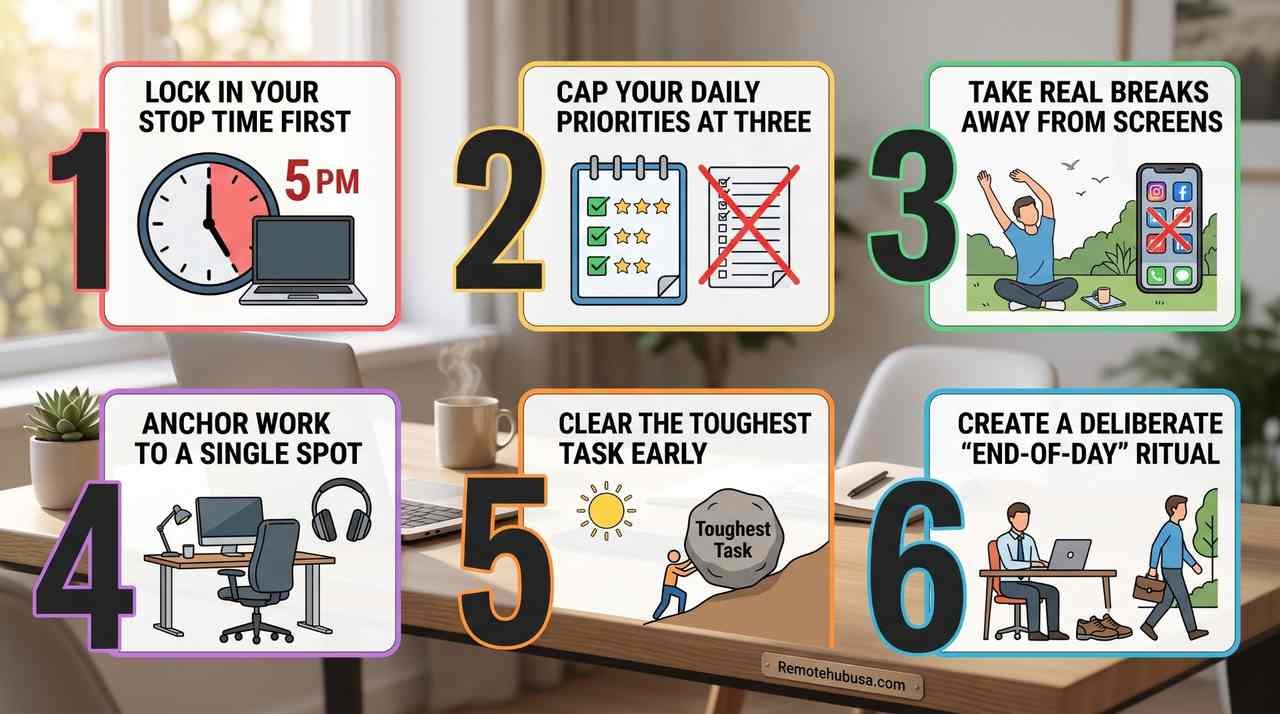
1. Lock In Your Stop Time First
The most critical boundary in remote work is knowing when the day ends. Without a clear finish line, work quietly stretches across the entire evening. You end up burning out without actually producing more. Decide on a hard cutoff time, communicate it clearly to the people you live with, and stick to it. Even if your schedule is flexible, establish a reliable daily window—”flexible” should never mean “all the time.”
2. Cap Your Daily Priorities at Three
Before opening your inbox, write down the three tasks that would make the day a genuine win. Resist the urge to draft a ten-item checklist; expansive to-do lists feel productive to write at 9:00 AM, but they feel demoralizing when half-finished by 4:00 PM. If you complete your core three by early afternoon, anything else is a bonus.
3. Take Real Breaks Away from Screens
Pacing yourself prevents afternoon brain fog. Aim for 30 to 50 minutes of focused effort, followed by a 5 to 10-minute break.
Important: Scrolling social media does not qualify as rest. It keeps the brain stuck in an active consumption loop. Step away from the desk, drink a glass of water, stretch, or look out a window to let your mental slate reset.
4. Anchor Work to a Single Spot
A separate home office is ideal, but not strictly necessary. Even the quiet corner of a dining table or a dedicated small desk works. The objective is psychological: train your brain that sitting in that specific spot means deep work, and walking away means clocking out. Invest first in an ergonomic chair and a solid noise-canceling headset before worrying about complex desk setups.
5. Clear the Toughest Task Early
Every workday comes with one heavy, uncomfortable item—the critical report, the sensitive email, or the messy spreadsheet. Do that task first. Postponing it consumes unnecessary mental energy throughout the day, while clearing it early sets positive momentum and lightens the rest of your afternoon.
6. Create a Deliberate “End-of-Day” Ritual
Commuting home from a traditional office provided a built-in transition between work and personal life. At home, that transition must be manufactured. Five minutes before your stopping time, jot down tomorrow’s top three priorities, close your browser tabs, shut down your computer, and step outside for a brief walk or change your clothes. It creates a physical cue that the workday is officially over.
Frequently Asked Questions
How many hours of true deep work should I expect in a day?
Most knowledge workers max out at three to five hours of concentrated deep work per day. The rest goes toward emails, quick follow-ups, and operational tasks. Expecting eight uninterrupted hours of pure creative or analytical focus is unrealistic and leads directly to burnout.
Do I need specialized productivity software right away?
No. A simple pen, a notebook, and your phone’s built-in countdown timer are enough to start. Get your baseline habits working first before introducing complicated task managers or tracking apps.
How do I handle a noisy household?
Clear communication comes first: outline your active working hours with family or housemates. A comfortable pair of noise-canceling headphones will resolve most everyday distractions. If home remains consistently disruptive, working from a local library or quiet workspace two days a week can provide much-needed breathing room.
If you can only implement one change this week, make it your hard cutoff time. Once your workday has clear edges, the rest of your productivity systems will fall into place much faster.
“What habit keeps your remote workday balanced? Let me know in the comments below.“