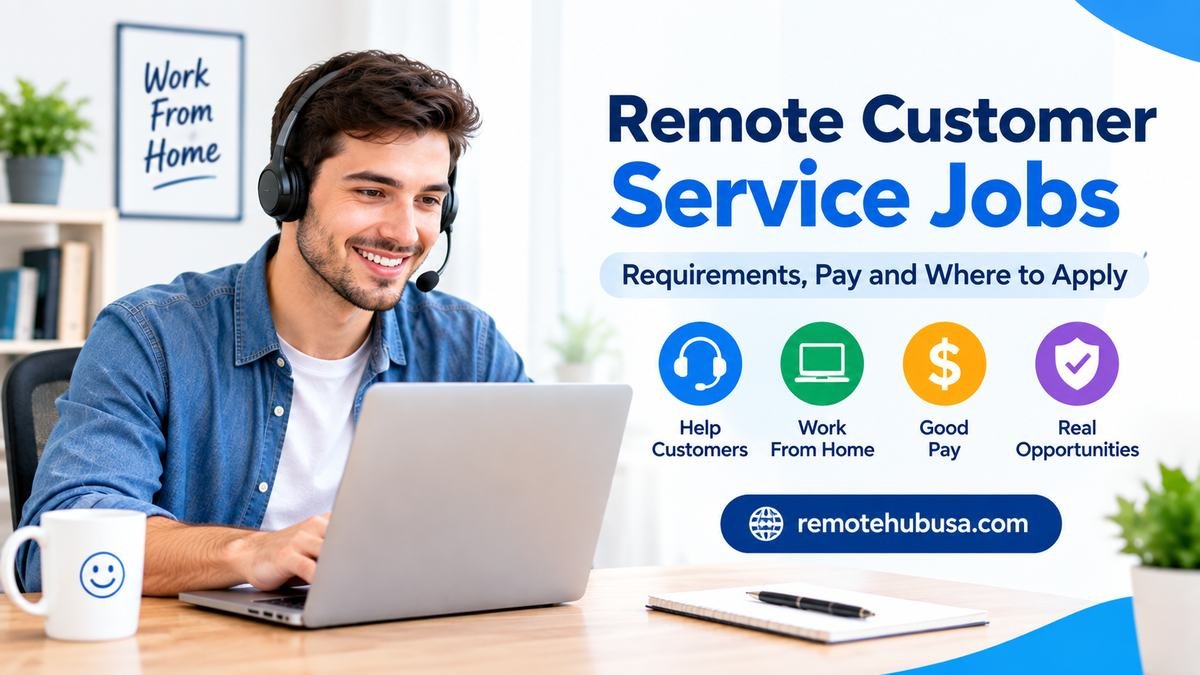
Remote customer service is one of the most common ways people start working from home. You answer questions, solve problems and help customers by phone, email or chat, and you do it from your own desk. The work is real, but the pay, the competition and the hiring process are not always what job ads suggest.
This guide covers what the job involves, what employers ask for, what it pays, and where to apply safely.
What Does a Remote Customer Service Representative Do?
Your daily tasks depend on the company and the channel you work in. Most roles include some mix of these:
- Answering questions about products, orders, billing or accounts
- Solving problems such as refunds, delivery delays or login issues
- Recording each interaction in the company’s customer system
- Escalating complex cases to a supervisor or a specialist team
- Following scripts and policies while still sounding like a real person
Roles are usually grouped by channel:
| Channel | What it looks like |
|---|---|
| Phone support | Live calls, often in shifts, with a headset |
| Chat support | Handling one to three text conversations at once |
| Email or ticket support | Written replies with more time to think |
| Technical support | Helping customers troubleshoot devices or software |
If you dislike talking on the phone, chat and email roles are usually a better fit.
Requirements: What Employers Usually Ask For
Requirements vary, but most entry-level remote roles look for the following.
Education and experience
- A high school diploma or equivalent is common.
- Many entry-level roles need no degree, and prior customer-facing work (retail, restaurant, front desk) counts as experience.
- Specialized roles such as banking, insurance or technical support may ask for more training or knowledge.
Skills
- Clear communication. You must explain things simply and politely, in writing and by voice.
- Patience. Some customers are frustrated, and staying calm is a big part of the job.
- Typing and computer basics. Speed and accuracy matter, especially in chat roles.
- Problem-solving. You need to find the right answer quickly using the company’s tools.
- Comfort with software. Help desk tools, CRM systems and video calls are part of the routine.
Home setup
Employers often require:
- A reliable high-speed internet connection
- A computer that meets their specifications
- A headset with a microphone
- A quiet, private space, since many companies restrict background noise for security and call quality
Some companies also run a background check or ask you to be available for certain shifts, including evenings or weekends. Always confirm the schedule before accepting an offer.
How Much Do Remote Customer Service Jobs Pay?
Pay depends on the company, the industry, your experience and the type of support. Here is what official US data shows for the profession overall.
The US Bureau of Labor Statistics (BLS) reported a median hourly wage of $21.53 for customer service representatives in May 2025. The lowest-paid 10 percent earned less than $15.27 per hour, and the top 10 percent earned more than $30.57. You can read the full data on the BLS Occupational Outlook Handbook page for customer service representatives.
Keep two things in mind when you read these figures:
- They cover all customer service representatives, not only remote workers. Remote pay can be higher or lower than in-office pay depending on the employer.
- Entry-level roles usually start toward the lower end. Technical, financial or specialized support tends to pay more, and experience helps you move up.
Some remote roles are paid hourly, while others pay per call or per task. Ask how you will be paid, how many hours are guaranteed, and whether you are classified as an employee or an independent contractor, because that affects taxes and benefits.
A Realistic Look at Job Demand
It helps to know what the market looks like before you start applying. BLS projects that employment of customer service representatives will decline 5 percent from 2025 to 2035, yet it still expects about 289,500 openings each year, mostly because workers move to other jobs or leave the labor force.
In practice, this means:
- Automation and chatbots are handling simpler questions, so basic roles face more competition.
- Openings still exist because turnover in this field is high.
- People who handle complex, emotional or technical issues are harder to replace with automation.
To stay competitive, build skills beyond scripted answers. Product knowledge, technical troubleshooting, a second language and experience with CRM tools all make your application stronger.
Where to Apply for Remote Customer Service Jobs
1. Company career pages. Many large employers in retail, banking, insurance, travel and technology post remote support roles on their own websites. Use filters like “remote” or “work from home.”
2. Major job boards. LinkedIn, Indeed and Glassdoor let you filter by remote work. Set up alerts so you see new listings early.
3. Remote-focused job boards. Sites such as We Work Remotely and Remote.co list remote-friendly roles. Some paid boards screen listings, but read their refund policy first.
4. Customer support outsourcing companies. Many businesses hire outside firms to run their support teams. These firms often hire in large numbers, which can help beginners get a first role.
5. Referrals. If you know someone working in customer support, ask about openings. Employees often hear about vacancies before they are posted.
New to the job search? Read our guide on how to find legit remote jobs in the USA before you apply anywhere.
How to Spot a Fake Customer Service Job
Customer service is a popular target for job scams because the work sounds easy. Be careful if a “job”:
- Asks you to pay for training, software or equipment before you start
- Sends you a check to deposit and asks you to send part of it elsewhere
- Offers the job without any interview or only a chat-app conversation
- Promises very high pay for simple work
- Uses a free email address (Gmail, Yahoo) instead of a company domain
- Asks for your bank details or Social Security number before a signed offer
Real employers pay you, not the other way around. Check the job on the company’s official careers page, search the company name with the word “scam,” and confirm the recruiter exists on LinkedIn.
How to Make Your Application Stand Out
Tailor your resume. Copy the important keywords from the job description into your resume where they honestly apply, such as “customer support,” “CRM,” “chat support” or “conflict resolution.” Many companies screen resumes with software first.
Show results, not just duties. Instead of “handled customer calls,” write something like “resolved customer issues on the first contact and maintained positive feedback.” Use real numbers only if you actually have them.
Prepare for the typing and chat tests. Many employers test typing speed, grammar and problem-solving. Free online typing tests are a good way to practice.
Get ready for the interview. Expect scenario questions such as, “How would you handle an angry customer?” A simple structure works well: listen, apologize when appropriate, find the solution, confirm the customer is satisfied.
Check your setup. Test your internet speed and headset before a video interview.
Remote Hub USA tip: Keep a simple list of every job you apply to, with the date, company name, job link and the contact person. Remote roles close fast, and this list helps you follow up at the right time and avoid applying twice.
Not sure which role fits you? Our list of entry level remote jobs in the USA and our guide to remote data entry jobs for beginners can help you compare options.
Pros and Cons of Remote Customer Service Work
Advantages
- No commute, and lower daily costs
- Entry-level friendly, with paid training at many companies
- Clear career paths into team lead, quality assurance, training or account management
- Flexible schedules in some companies
Challenges
- Difficult or upset customers can be stressful
- Performance is often tracked closely (call time, response time, satisfaction scores)
- Shift work, including evenings or weekends, is common
- Isolation, since you work alone most of the day
Knowing both sides helps you decide whether this career suits your personality. If you prefer more independent work, you may also like remote virtual assistant jobs.
Frequently Asked Questions
Can I get a remote customer service job with no experience?
Yes, many companies hire beginners and provide training. Any experience dealing with people, such as retail or volunteering, helps.
Are these jobs full time or part time?
Both exist. Some roles are seasonal, such as extra support during holiday shopping, while others are permanent.
Do I need to live in the USA?
Often yes, because employers may need you to work US hours, follow US labor rules or handle US customer data. Requirements are listed in each job post, so read them before applying.
What is the difference between an employee and a contractor?
Employees usually have taxes withheld and may receive benefits. Contractors handle their own taxes and usually do not get benefits. Read the agreement before you sign.
Will AI replace customer service jobs?
AI is taking over simple, repetitive questions, but companies still need people for complex, sensitive or high-value conversations. Building specialized skills makes your career more secure.
Final Thoughts
Remote customer service can be a practical entry point into working from home, especially if you communicate well and stay patient under pressure. Expect competition, verify every employer, never pay to get hired, and keep improving your skills so you can move beyond entry-level pay over time.
Disclaimer: This article is for general information only. Pay, requirements and job availability change frequently, and the figures above are national averages, not guarantees. Always confirm details directly with the employer before applying or accepting an offer.